-

Trump in new push to lower drug prices
U.S. President Donald Trump announced on Sunday that he plans to sign an executive order to lower the cost of prescription drugs to the same levels paid in other wealthy countries — something he claims could reduce prices by 30 to 80 percent.
-

Astra Zeneca faces potential multimillion-dollar fines in China
Astra Zeneca could be forced to pay up up to $8 million in fines for allegedly unpaid import duties in China, as the company seeks to rebuild trust following earlier controversies.
-

Mikael Kubista back with new venture after turbulent exit
Entrepreneur and researcher Mikael Kubista is starting a new company. Now he is also free to comment on the sequence of events that led to him losing ownership of his life's work – the company Tataa Biocenter. “Not only did they take our company away from us. They followed up by showering us with lawsuits,” he says.
-

Quretech granted a European patent for a new type of antibiotic
The European patent provides protection until 2041. Previously, the patent was granted in China, and the application is currently under review in the USA, India, and Japan.
-

A tiny animal with great importance
From the mythical Ganges River to the less sacred, but considerably cleaner waters in KI's aquariums in Solna. The little zebrafish has made an unconscious career – as an increasingly important model organism in medical research.
-

Security flaw in Swedish breast cancer screening software – woman passed away
A lack of safeguard in Sectra's software led to a woman with breast cancer receiving an incorrect diagnosis. She later passed away. The software is used in 20 out of 21 regions in Sweden. It is also used in neighbouring Nordic countries. “Extremely serious,” says the Sectra CEO to Medtech Magazine.
-

Health politician Lina Nordquist: ”I find it hard to be idle”
She is the pharmacist and researcher who grew tired of the breakthroughs that never materialised and knowledge that never seemed to reach patients, so she decided to make a change from within. Life Science Sweden meets Lina Nordquist, Member of Parliament for the Liberals and their spokesperson on healthcare policy, to have a conversation about reality, politics, and the need for writing.
-

The business coach: “We need to learn from our mistakes”
The past year has been challenging for many biotech companies, with several comapanies facing financial stress and bankruptcy. To understand how entrepreneurs can navigate these tough times, Life Science Sweden spoke to Pia Keyser, a business coach at Umeå Biotech Incubator, who has worked with many companies in the industry.
-

Rise and Scantox cease conducting animal testing in Stockholm
Access to in vivo toxicology services is significantly decreasing in the Stockholm area as Rise shuts down animal testing and Scantox reorganizes. ”The costs are high, and demand is weak”, says the division manager at Rise to Life Science Sweden.
-

Partial court victory for entrepreneur who lost his company
Swedish life science entrepreneur Mikael Kubista has won the first round against a law firm that he, along with other co-owners, sued for negligent advice in connection with losing his company, Tataa Biocenter.
-

Investigations against AstraZeneca: ”Chinese interests may be behind them”
Why are there several investigations against AstraZeneca employees in China right now? Life Science Sweden continues to seek answers.
-
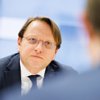
Orbán's extended arm becomes health commissioner in the EU
Hungarian Olivér Várhelyi may soon become the most influential official for the healthcare and pharmaceutical industry in the EU. Várhelyi, who is close to Hungarian prime minister Viktor Orbán, is seen as a controversial figure due to his opposition to abortion and for calling EU members ”idiots.”
-

Drug development booms in Medicon Valley
When it comes to developing new medicines, the Öresund region is one of the top performers in the EU. Companies working on commission for pharmaceutical companies are highlighted as a success factor. “Everyone has heard of Novo Nordisk, but these companies are unknown to people outside the industry despite being the golden vein of the life science sector,” says Anette Steenberg, CEO of the cluster organisation MVA.
-

Roche’s Genentech terminates licencing deal with Norwegian biotech
Genentech is ending a license collaboration with Norwegian biotech Nykode Therapeutics regarding a clinical stage cancer vaccine program.
-

Lilly´s Nordic manager on Mounjaro launch in Sweden: "Patients deserve respect"
Another blockbuster diabetes and obesity drug has made its way into the Swedish market – with promises of a stable supply and availability for patients. “What we see is a significant unmet need, so we are expecting to have quite a good welcoming in the market", says Daniel Lucas, Managing Director Nordic Countries at the American pharmaceutical giant Eli Lilly.
-

”The importance of stratification in a statistician’s August kitchen”
Ingrid Lönnstedt writes about an experiment of her own at home and about what lessons can be learned from it, in a science column.
-

GSK pays 2.2 billion dollars to settle Zantac lawsuits
British drugmaker Glaxo Smith Kline, GSK, has struck a 2.2 billion dollar settlement, thereby resolving a vast majority of the liability cases pending against the company in the U.S. that alleged its discontinued drug Zantac caused cancer.
-

Anna Törner: ”Mom, do you think you’ll ever get married again?”
”I realize I’m slowly descending into that familiar statistical rabbit hole, where life’s biggest uncertainties are reduced to point estimates and confidence intervals”, Anna Törner writes in a column.
-

Takeover bid is being completed – Japanese company acquires Calliditas
Japanese company Asahi Kasei completes the bid for Calliditas Therapeutics after reaching over 90 percent of the shareholding. Callidita's board has now decided to apply for delisting of the company´s share from Nasdaq Stockholm.
-

Thumbs down for lecanemab in the EU – “Very surprised”
The Azheimer's drug lecanemab has received a negative assessment from the European Medicines Agency’s Committee for Medicinal Products for Human Use (CHMP), according to an announcement made by the Agency last week. Bioarctic’s CEO Gunilla Osswald describes the reactions after the announcement as a surprise and disappointment.
-

Setback for pharmaceutical companies in the Zantac case
A Delaware judge has ruled in favour of allowing expert witnesses to testify in a case involving the now-cancelled drug Zantac and its potential carcinogenicity.
-

Nobel Prize winner Torsten Wiesel turns 100: “Old men like me should use their experience to help the young”
In 1955, a young Torsten Wiesel jumped on a boat to the US and embarked on a fabulous career as a neuroscientist, crowned with a Nobel Prize for his work. Now 100 years old, he looks back on an intense life and his upbringing in Stockholm, Sweden, which shaped his desire to help the vulnerable in society.
-
Innovative start-up helps doctors, scientists and industry balance coagulation risks
For many doctors caring for seriously ill patients, for example, in stroke units and cancer wards, maintaining the life-saving balance between bleeding and thrombosis is an ongoing challenge. In the late 1980s, scientists at Maastricht University in the Netherlands developed an innovative method, the thrombin generation assay (TGA), which provides a complete overview of a physiological process crucial for maintaining normal haemostasis.
-

“Conducting research at universities is becoming more and more like working at a research hotel”
The government wants Swedish research to focus on excellence and innovation, but can the two be combined? Life Science Sweden talks to Anna Falk, a professor at Lund University, about research policy, the constant hunt for funding in academia and what constitutes ‘fine research’.
Get access to all content on Life Science Focus
No commitment or card information required
Already a subscriber? Log In
Applies to personal subscription only.
Contact us for a enterprise solution.
Advertisement
Advertisement
Advertisement
Advertisement
 BREAKING